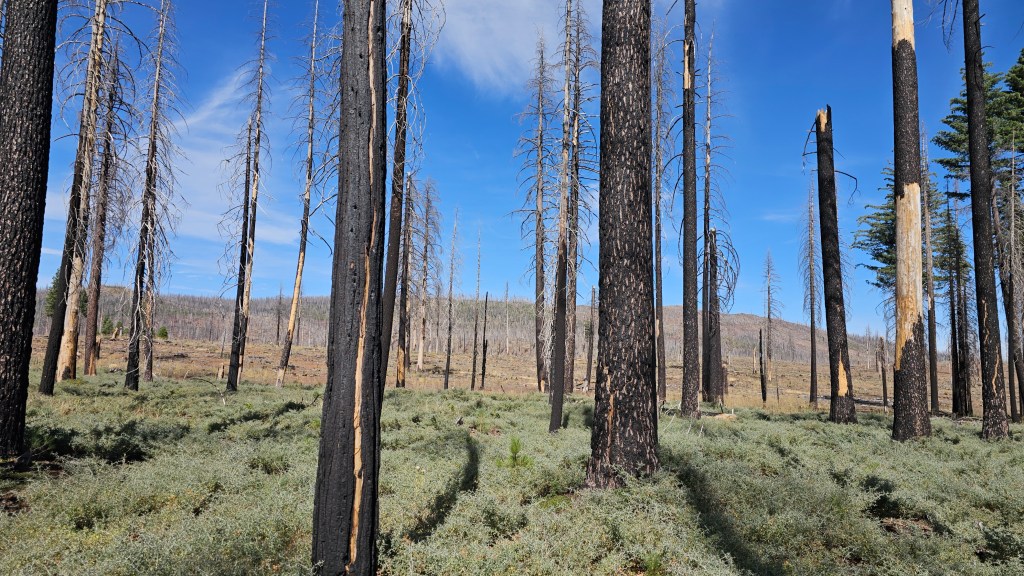
Fire leaves behind a landscape that can be difficult to look at – blackened trees, empty foundations, and the reminders of what once stood there.
But if you walk through a burned forest long enough, you begin to notice something else.
Life.
A tiny pine sapling pushing through the ash. New growth appearing along side the charred remains. Evidence that what looks dead is not necessarily the end of the story.
That is the picture behind this video, Yet, I Will Rejoice.
Living in the mountains of Northern California, wildfire is not an abstract idea for us. We have watched it destroy communities, experienced evacuation ourselves, and seen firsthand the devastation left behind. But we have also seen something else: resilience, restoration and new life.
Habakkuk understood what it meant to look at circumstances that offered no reason for worldly optimism and still choose joy.
Not because things were going well.
Not because there was plenty in the fields or livestock in the stalls.
But because God was still God.
There are seasons when the things we depend upon can disappear. Possessions can be lost. Plans can change. Circumstances can leave us standing among the ashes.
Yet God remains.
The little sapling growing among the blackened trees became a reminder to me that destruction does not have the final word.
And neither do our circumstances.
“Yet I will rejoice in the LORD; I will take joy in the God of my salvation.”
Sometimes faith simply looks like this:
Looking at the ashes – and rejoicing anyway.
The burned forest, the ruins of Greenville, and the devastation left by the fires remind us that earthly things can disappear. But a small pine sapling growing among blackened trees tells another story: God can bring new life from the ashes.
“Yet I will rejoice in the LORD; I will take joy in the God of my salvation.” – Habakkuk 3:18


Leave a Reply