There was simply too much rich Scripture woven into this idea to fit comfortably into a two – minute video. Rather than rush through the connections, I thought I would expand on them here, because the more I looked at these stories, the more I began to see a beautiful pattern running through Scripture.
Throughout Scripture, wells become places of unexpected encounters. They are places where people come thirsty, where strangers meet, where water is drawn—and sometimes, where lives are changed.
Three women in particular stand out in the Old Testament. Rebekah meets Abraham’s servant at a well in Paddan Aram. He has come looking for a bride for Isaac, and Rebekah’s willingness to draw water becomes part of the remarkable story of how God brings them together. Rachel encounters Jacob at a well in Haran, where Jacob rolls away the stone and waters Rachel’s flock. And in Midian, Moses encounters Zipporah and her sisters at a well. When shepherds drive them away, Moses intervenes and waters their flock.
Three women. Three wells. Three encounters involving water, rescue, and marriage.
Then John takes us to another well.
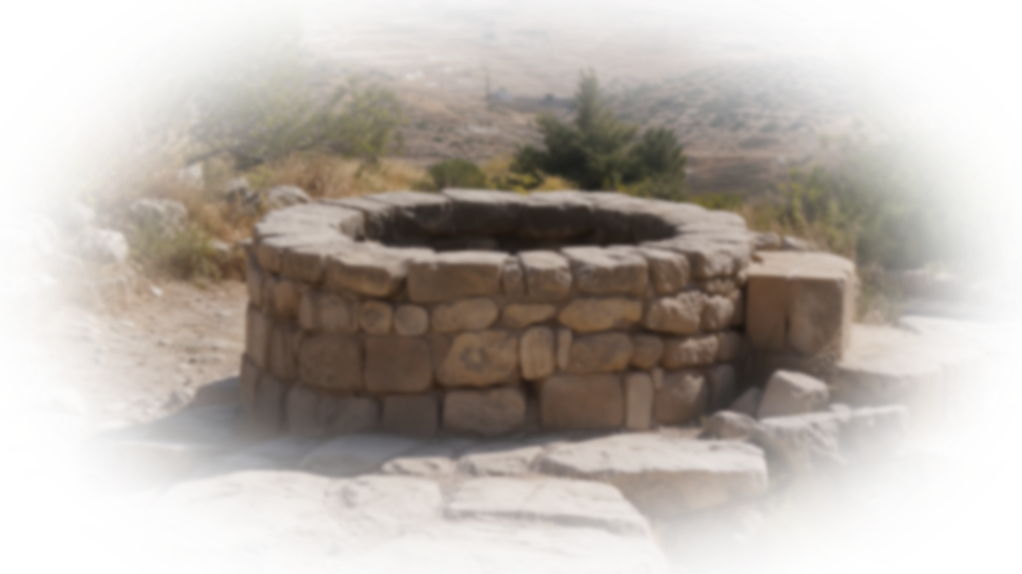
Jesus comes to Jacob’s well in Samaria and meets a woman whose life does not resemble the women we have just encountered. Her marital history is complicated. She is a Samaritan, and Jesus is a Jewish man. Cultural, religious, and social boundaries stand between them. Yet Jesus deliberately crosses those boundaries to meet her.
And here the familiar pattern begins to change. In the earlier accounts, water is given to the man or to his animals. But at Jacob’s well, Jesus asks a thirsty woman for a drink – and then offers her something far greater than the water she came to draw: living water.
But the One who meets her is unlike anyone who came before.
The first three women encountered men who would become a bridegroom, or was connected to a bridegroom. Rebekah encountered the servant sent to find Isaac’s bride. Rachel encountered Jacob, who would become her husband. Zipporah encountered Moses, who would become hers.
But at Jacob’s well, the Bridegroom Himself had come.
And He had not come looking for a woman who had proven herself worthy. He came looking for someone who was thirsty.
That is where this story becomes more than an interesting parallel to the Old Testament. It becomes a picture of grace.
Jesus knew exactly who this woman was. He knew her history. He knew her failures. He knew her thirst. And He went to Samaria anyway.
John tells us that Jesus “had to” pass through Samaria. The Greek is ἔδει (edei), from δεῖ (dei) – a word expressing necessity: it was necessary.
Jesus was not wandering aimlessly through the countryside. The Savior of the world, God in the flesh, had an appointment at a well. An appointment with a woman who needed grace.
And perhaps that is why this story reaches far beyond one Samaritan woman two thousand years ago. Because we are not so different from her. We may come to different wells, carrying different burdens and different histories. We may have learned to hide our thirst from everyone around us. But Jesus already knows.
He knows the wounds. He knows the failures. He knows the things we would rather keep hidden. And He comes anyway.
He doesn’t wait for us to become worthy of His love. He meets us where we are – warts, wounds, failures and all.
We come thirsty.
And the Bridegroom gives us living water.
He gives us the greatest gift anyone can give.
He gives us Himself.
If you have read this far, thank you! Please consider sharing and subscribing to my blog. Also, please tell me what you liked or disliked in the comments section below.


Leave a Reply