Build A Fun Travelogue with Google Earth Pro
I am creating a series of maps that depict the travels of the Apostle Paul. This is Part One of the tutorials about how I created the first one, The Road to Damascus.
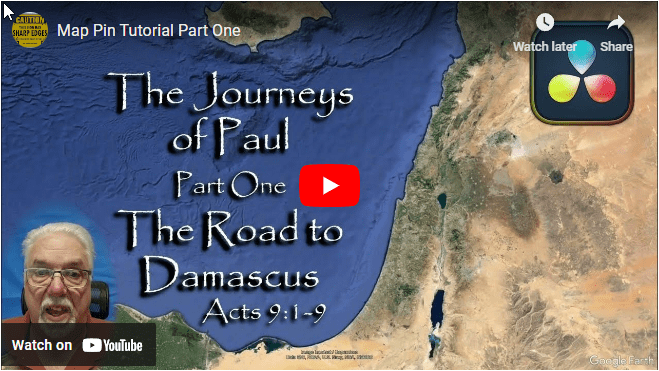
I am creating a series of maps that depict the travels of the Apostle Paul. This is Part One of the tutorials about how I created the first one, The Road to Damascus.

Many of you may be thinking that I’m referring to the book by the name, “The 80/20 Principle.” Possibly you are thinking of the Pareto Rule that asserts that 80% of outcomes (or outputs) result from 20% of all causes (or inputs) for any given event — whatever that means. More likely you believe that the 80/20 rule pertains to church congregations where it is said that 80% of the work of any congregation is done by 20% of the congregants.
There is much to be said about my last example above, most congregations can use more volunteer effort. The work of the Body of Christ is essential to the spread of the Gospel. Take a moment to review 1 Corinthians 12:12-22
12 For just as the body is one and has many members, and all the members of the body, though many, are one body, so it is with Christ.
13 For in one Spirit we were all baptized into one body—Jews or Greeks, slaves or free—and all were made to drink of one Spirit.
14 For the body does not consist of one member but of many.
15 If the foot should say, “Because I am not a hand, I do not belong to the body,” that would not make it any less a part of the body.
16 And if the ear should say, “Because I am not an eye, I do not belong to the body,” that would not make it any less a part of the body.
17 If the whole body were an eye, where would be the sense of hearing? If the whole body were an ear, where would be the sense of smell?
18 But as it is, God arranged the members in the body, each one of them, as he chose.
19 If all were a single member, where would the body be?
20 As it is, there are many parts, yet one body.
21 The eye cannot say to the hand, “I have no need of you,” nor again the head to the feet, “I have no need of you.”
22 On the contrary, the parts of the body that seem to be weaker are indispensable,
The Holy Bible: English Standard Version (1 Co 12:12–22). (2016). Crossway Bibles.
Especially, read verse 22. If you belong to a congregation (Gk. ἐκκλησία, or ecclesia), you are indispensable! So, think and pray about how you can help your ecclesia. Think outside the box, though. Perhaps you play guitar and sing Christian songs. Don’t volunteer for the Praise Team, learn some hymns, and go to a nearby nursing home to volunteer there. That is as much the work of the Body of Christ as working inside the building where His Body meets.
So, if you are thinking that the 80/20 principle got downgraded and now 15% of the ecclesia is doing 80% of the work, find your niche and get to work!
No, the 80/15 principle is from something our Pastor, Todd DuBord, mentioned in his sermon on March 10, 2024. His third from last message before he retires from pastoral ministry. Look back at 1 Corinthians 12 for a moment. To misquote Aristotle, “The whole is greater than the sum of its parts.”
This is especially true when the Holy Spirit is involved, He will help the Body do the work necessary. As Pastor Todd retires, many of the Body will step in; Elder Scott Cory will take the pulpit every Sunday in April and I am looking forward to his messages. Even a teeny part of the Body, like me, will pitch in due to the occasion of my thirtieth Re-Birthday (May 5, though I will be out of town that week so it will possibly happen some other Sunday in May).
No, 80/15 refers to the wattage of our light. Matthew 5:14-16 Jesus said,
14 “You are the light of the world. A city set on a hill cannot be hidden.
15 Nor do people light a lamp and put it under a basket, but on a stand, and it gives light to all in the house.
16 In the same way, let your light shine before others, so that they may see your good works and give glory to your Father who is in heaven.
The Holy Bible: English Standard Version (Mt 5:14–16). (2016). Crossway Bibles.
What is the wattage of your lamp? If truth be told, my wattage is much closer to 15, and probably less if I’m being honest. Understand this; when and where your light shines can make a huge impact for the Gospel.
For instance, if things are going great for you and you are generating an 80-Watt light, that isn’t as great as you might think.
When things are going well, the sun is shining, and birds are singing that 80-Watts isn’t really that bright. Imagine that “city set on a hill” on a sunny day. 80-Watts doesn’t illuminate very much because the sun is far brighter.
But what if it’s Snoopy’s dark and stormy night? 80-Watts, indeed, even 15-Watts becomes a shining beacon. That barely 3-Watt light bulb that I can manage to generate when things are bleak might not be much, but it is a light that illuminates for someone else to see Christ.
Those are the times when the people around us can’t understand how we can still shine our light, weak as it is. When things are at their worst, that is when unbelievers wonder how we can have any kind of positive attitude. That is when they will ask the question that is inferred by Peter when he says in 1 Peter 3:15:
15 But sanctify the Lord God in your hearts: and be ready always to give an answer to every man that asketh you a reason of the hope that is in you with meekness and fear:
The Holy Bible: King James Version (Electronic Edition of the 1900 Authorized Version., 1 Pe 3:15). (2009). Logos Research Systems, Inc.
80-Watts on a bright sunny day doesn’t exhibit that hope, but 2 or 3-Watts during a “Dark Night of the Soul” can do more for the Gospel than 1000-Watts when life is sunny.
As a Boomer, I’m not supposed to be able to do these things, I’m supposed to be confused by tech, but I am not, which is what makes me an OK Boomer. In the end, I want to encourage people to try new things. What is the worst thing that can happen? besides, if I can do these things, anyone can.
In this video I reveal how I create seamless loops out of video footage. To get started, you don’t need a fancy camera, or high end software, and as you will see in the video, you don’t even need a tripod!
You can make one of these videos with a phone, a computer and the free version of Davinci Resolve, which you can download here: https://www.blackmagicdesign.com/products/davinciresolve
Disclaimer: Davinci Resolve does require a computer that has a dedicated graphics card.
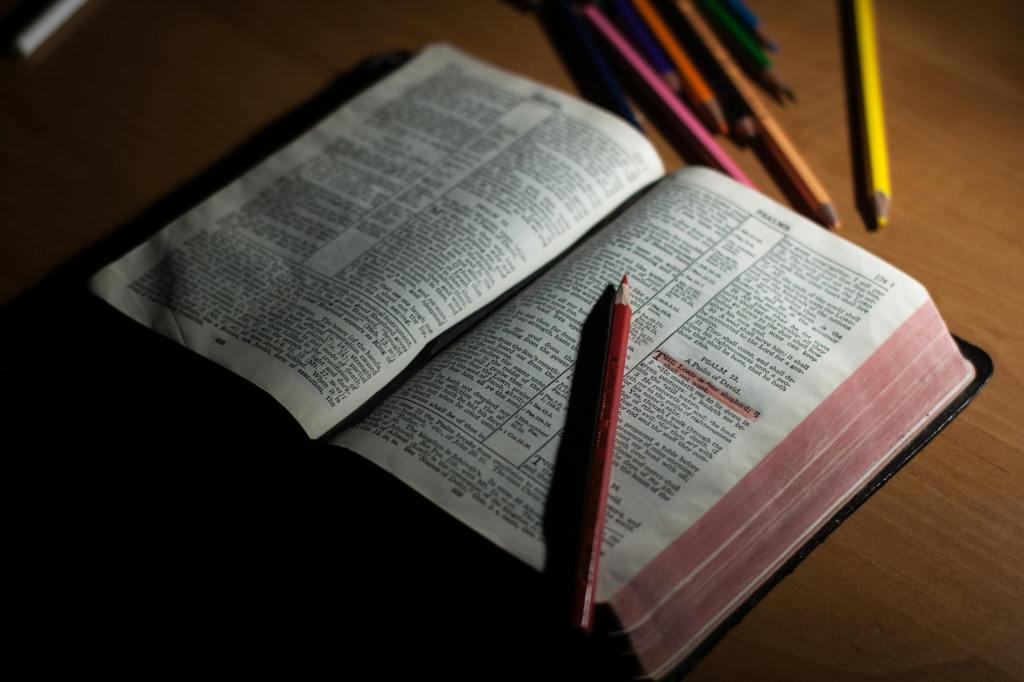
Proverbs 22:17–21
17 Incline your ear, and hear the words of the wise, and apply your heart to my knowledge,
18 for it will be pleasant if you keep them within you, if all of them are ready on your lips.
19 That your trust may be in the Lord, I have made them known to you today, even to you.
20 Have I not written for you thirty sayings of counsel and knowledge,
21 to make you know what is right and true, that you may give a true answer to those who sent you?
The Holy Bible: English Standard Version (Pr 22:17–21). (2016). Crossway Bibles.
I have a saying that I often use, and that is; “What does the Bible say?” No one seems to have an answer when I ask. This may be an American phenomenon, perhaps the Church in other Western countries as well, but it seems that Christians too often get their opinions from the world around them and not from the Bible.
Maybe it is in the way we read the Bible? To many people the Word of God is a collection of sayings by which to live their lives. And, as the Scripture above attests, it is, but it is more than that.
In the Casting Crowns song, The Word is Alive the following words are spoken:
The Bible was inscribed over a period of 2000 years
In times of war and in days of peace
By kings, physicians, tax collectors, farmers
Fishermen, singers and shepherdsThe marvel is that a library so perfectly cohesive
Mark Hall, Steven Curtis Chapman; 2007 Primary Wave Brian (Chapman Sp Acct); Sparrow Song; Be Essential Songs; My Refuge Music
Could have been produced by such a diverse crowd
Over a period of time which staggers the imagination
Jesus is its grand subject, our good is designed
And the glory of God is its end
Do we get that God’s Word must be the source for our opinions? When we allow MSNBC, CNN, OANN, ABC, CBS, NBC, Fox news, AP, Reuters or the myriad of todays “Influencers” (take your pick) to determine what opinion we should take on social issues, we do an injustice to what God has provided for us.
This morning, I read an article on Challies.com. (Link at the bottom, I’m afraid people will go there and not come back here. 😊)
Tim didn’t write much of the article, he merely allowed Theodore Cuyler’s words to take precedence. For those who don’t know him; Theodore Ledyard Cuyler (January 10, 1822 – February 26, 1909) was an American Presbyterian minister and writer. (https://en.wikipedia.org/wiki/Theodore_L._Cuyler).
If the words of Mark Hall & Steven Curtis Chapman above seem poetic to you then Cuyler’s are gonna knock your socks off. Here is the final paragraph:
Such is the wondrous volume which God has given to man, and which outweighs all the libraries on the globe. It contains many writings, yet is it but one book. It has many writers, yet it is all from one Author, the Almighty Spirit of God. The pure, white, spotless fleece hath throughout its connecting fibers; the fabric is divine in its origin, its unity, and its imperishable power and glory.
Link at the end
We must stop allowing the world to give us our opinions, God’s Word is “divine in its origin” the opinions of the world are not. People’s opinions change, for instance did you know that former President Clinton used MAGA long before former President Trump? (https://www.youtube.com/watch?v=EWHlLsUIG8E&ab_channel=GregChambers). The opinions of people who aren’t rooted in the Word will be one thing today and another tomorrow. A Christian who lets the world, these news networks or influencers, form their opinion is the double-minded person in James, who wrote:
James 1:5-8
5 If any of you lacks wisdom, let him ask God, who gives generously to all without reproach, and it will be given him.
6 But let him ask in faith, with no doubting, for the one who doubts is like a wave of the sea that is driven and tossed by the wind.
7 For that person must not suppose that he will receive anything from the Lord;
8 he is a double-minded man, unstable in all his ways.
The Holy Bible: English Standard Version (Jas 1:5–8). (2016). Crossway Bibles.
When we read the Word are we ever mindful that it is a cohesive whole, that it is complete and enough for every part of life? Wanna know what to think about social issues of today? How about immigration? Here is a taste; the Bible says to welcome the “sojourner,” but in Exodus chapter 12 it says that those sojourners are subject to the laws of their adopted country, see also Leviticus 24. Remember, circumcision was one of those laws when Exodus was written. No one is asking anything so drastic of those sojourners who wish to come here.
Lawbreakers should not be welcome in any society, on the other hand, perhaps immigration laws can be adjusted to make it easier for those who want to come here legally to make a better life for themselves and their families. It’s difficult to make the case that you are a law-abiding sojourner when your first act is to break the law of the country you want to call home.
Whatever the social issue, the answer is in the Word. We need to stop looking to news commentators or the influencers of today for our opinions. Pop Culture is a moving target, and many of its followers eventually find that they have become the target.
Do you want to know what to think about any of the issues facing our country today? Ask God, it is in His Word.
Please be sure to subscribe before you click the promised Challies link: https://www.challies.com/articles/right-to-the-point/

I stood in church yesterday giving announcements and telling people about the new Church App and Church Website that I am working on; 64 years old and I am the tech guy; I am an OK Boomer after all. During those announcements I told our Pastor, Todd DuBord, that we don’t want him to return.
Perhaps some explanation is in order. Our pastor is retiring from pastoral ministry, his last Sunday will be Easter Sunday. He feels a calling elsewhere — he just doesn’t know what this calling is or where this calling is going to take him. I imagine that it is a frightening prospect for him; the not knowing. If I recall correctly, except for a seven- or eight-year period, he has been a pastor since achieving his Master of Divinity degree in the 1980’s.
Part of me envies this call on his life, and part (most of me, if I’m being honest) is glad that I don’t have the same call.
When he first told me that he was retiring and that he feels that God wants him elsewhere, my first thought was the words of Jesus in Matthew, “Remember Lot’s wife.” This was an incorrect assumption on my part, that is a Scripture about eschatology, or the end times. The actual Scripture that fits the situation is in Luke:
Luke 9:61–62
61 Yet another said, “I will follow you, Lord, but let me first say farewell to those at my home.”
62 Jesus said to him, “No one who puts his hand to the plow and looks back is fit for the kingdom of God.”
The Holy Bible: English Standard Version (Lk 9:61–62). (2016). Crossway Bibles.
We at Mount Lassen Community Church (MLCC) want his new ministry to be fruitful. We will be praying for him and his new ministry, but if he looks back it may have a detrimental effect on both MLCC and Todd DuBord.
I’m also gonna miss the guy, a lot. I hope he is around regularly, visiting and encouraging those of us who remain at MLCC. We will have a very large void to fill, but allowing a window for his return could cause his ministry to falter, and possibly cause the ministry of MLCC to falter as well. That could be disastrous for both. Matthew Henry writes this about it:
Those who begin with the work of God, must resolve to go on, or they will make nothing of it. Looking back, leads to drawing back, and drawing back is to perdition. He only that endures to the end shall be saved.
Henry, M., & Scott, T. (1997). Matthew Henry’s Concise Commentary (Lk 9:57). Logos Research Systems.
It is going to be emotional for me as the time draws near, he and I have worked closely for a decade. He sometimes thinks I am a magician. He has asked things like; “Can you add subtitles to this video?” or, “Can you remove part of this video?” or, “Make a video fit a song.” I’m an OK Boomer, so, yes, I can, because God has gifted me with a desire to learn this techy stuff.
I don’t know what a new pastor may want, but as long as I use those gifts that God has given me to for His purposes I will be in the place He has for me. Even if that place is telling our pastor not to return.
I thought I would “up my game” as non-boomers would say. Here is a video I created that is a tutorial for using Davinci Resolve to create a countdown video. This would be of interest to nerds like myself who do multimedia for church. It was a lot of fun to make, but quite time consuming. I was not able to write an article this week but may write 500 words or so for my Freeform Writing page tomorrow.
Having a “face for radio,” I waffled back and forth for a while whether I would put my image in the intro, in the end I realized that it reflected what my blog, An OK Boomer was about. I’m 64 years old so I shouldn’t be a techy guy, but I am.
Lastly, please be kind, it was my first attempt.
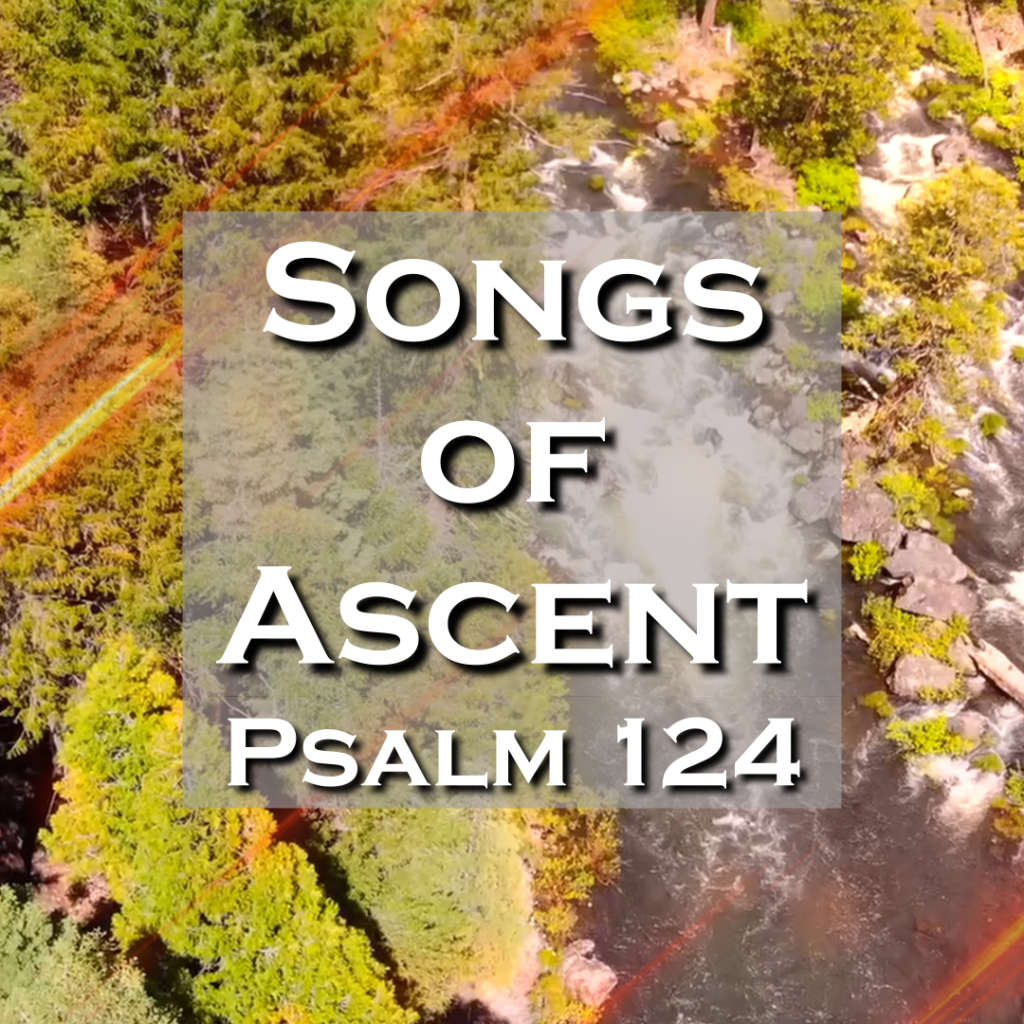
There are moments when we look back on something we have come through and realize just how close we were to being overwhelmed. We may remember the circumstances, the fear, or the uncertainty, but with the passage of time we can sometimes see something we could not see as clearly in the moment: we were not alone.
Psalm 124 gives Israel a way to remember such a deliverance. David begins with a striking question: “If it had not been Yahweh who was on our side…” What would have happened then?
The answer is sobering. The enemies of God’s people would have swallowed them alive. The waters would have overwhelmed them. The proud waters would have gone over their souls. The danger was not small, and the people were not portrayed as escaping through their own strength or ingenuity.
Instead, the psalm keeps bringing us back to the same truth: Yahweh was on our side.
That is the reason for their song.
David uses two vivid pictures to describe their deliverance. They were like prey that had escaped from the teeth of a predator, and like a bird that had escaped from a fowler’s snare. In both pictures, the outcome seemed almost certain. Yet the snare was broken, and they escaped.
It is easy to look at our own lives and focus on what went wrong, what frightened us, or how narrowly things turned out. Psalm 124 invites us to look at those same moments from another perspective. Perhaps instead of simply saying, “We made it through,” we should say, “Blessed be Yahweh.”
The psalm ends by looking beyond the particular danger that prompted David’s song: “Our help is in Yahweh’s name, who made heaven and earth.”
The God who helped His people then is still the God who made heaven and earth. And ultimately, this song of deliverance points us toward the greater rescue accomplished through Jesus Christ, who delivers His people from the powers of darkness.
Whatever dangers we may face, our hope is not in our ability to escape them. Our help is in Yahweh.
I usually include a short devotional with my videos. At least, I thought they were short. Apparently, my definition of “short” needed some adjustment. So, for those who would rather listen than read, I’ve created a TLDR version. It takes the devotional that accompanied the original Psalm 122 video, and turns it into a narrated video using the same footage. Same Psalm, same basic message, considerably less reading. Though, if you’d like, you can read it below.
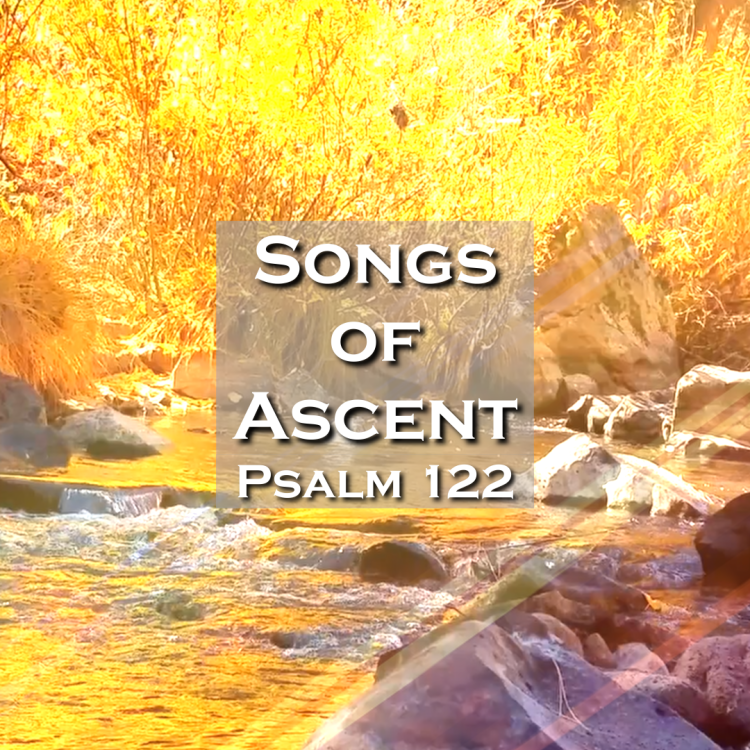
One of the things I have seen Christians do often is read a verse of the Bible and “rest in it.” Make no mistake, I have often been just as guilty.
Psalm 122 has one of those beloved verses. Psalm 122:6 says:
“Pray for the peace of Jerusalem. Those who love you will prosper.”
It’s a beautiful verse. It is certainly worth remembering and praying.
But there is more to the Psalm than verse 6.
One of the things I have done more than 35 times now is read through the Bible in one year. This isn’t to say that I don’t stop for in-depth study of smaller sections. I do. But I also like to read the WHOLE Bible.
One year, during that reading, Psalm 122:9 registered with me:
“For the sake of the house of Yahweh our God, I will seek your good.”
Wait a minute, I thought. The Temple isn’t there anymore.
It hasn’t been there since Titus and the Roman army destroyed it in A.D. 70. That’s a very significant event, especially when we remember what Jesus said about the Temple.
In Matthew 24:2, Jesus said:
“You see all of these things, don’t you? Most certainly I tell you, there will not be left here one stone on another, that will not be thrown down.”
Mark records the same prediction:
“Do you see these great buildings? There will not be left here one stone on another, which will not be thrown down.”
And Luke records:
“As for these things which you see, the days will come in which there will not be left here one stone on another that will not be thrown down.”
Jesus said the Temple would be destroyed.
And it was.
I once read a fascinating book about the destruction of Jerusalem by George Peter Holford, published in 1805. Its wonderfully long title is:
“The Destruction of Jerusalem, an Absolute and Irresistible Proof of the Divine Origin of Christianity: Including a Narrative of the Calamities Which Befel the Jews, So Far as They Tend to Verify Our Lord’s Predictions Relative to That Event.”
Holford’s argument was that the destruction of Jerusalem and the Temple provides powerful historical confirmation of Jesus’ predictions concerning that event.
So here I am, reading Psalm 122 and thinking about the house of Yahweh.
But where is that house today?
The Temple is gone.
And this is where the New Testament gives us something important to consider.
Paul writes in 1 Corinthians 3:16–17:
“Don’t you know that you are God’s temple and that God’s Spirit lives in you? If anyone destroys God’s temple, God will destroy him; for God’s temple is holy, which you are.”
We are God’s temple.
Notice that Paul is speaking to the church collectively. The people of God are God’s dwelling place because God’s Spirit dwells among them.
That brings me back to Psalm 122.
“For the sake of the house of Yahweh our God, I will seek your good.”
I don’t think that means we simply erase Jerusalem from the Psalm and substitute the word “church.” Psalm 122 was written about Jerusalem, the city where God’s people gathered and where the Temple stood.
But as Christians, we read the Psalm knowing what happened afterward. The Temple was destroyed, just as Jesus said it would be. And the New Testament tells us that God’s dwelling place is no longer centered in a building of stone.
God dwells among His people.
So what does it mean for us to pray for the peace of Jerusalem?
I absolutely believe we should pray for the peace of Jerusalem. I pray for the peace of the entire Middle East. And I believe that true and lasting peace ultimately requires something that politics, armies, treaties and human diplomacy cannot manufacture: the transforming love of Christ.
But perhaps Psalm 122 should also make us look closer to home.
If God’s people are now described as His temple, then shouldn’t we also care deeply about the peace, unity and spiritual well-being of the Body of Christ?
“For the sake of the house of Yahweh our God, I will seek your good.”
That sounds incredibly relevant today.
Perhaps praying for the peace of Jerusalem should never become an excuse to ignore the peace of God’s people standing beside us.
Perhaps seeking the good of God’s house means seeking the good of His people.
And perhaps that is one reason we should be careful not to “rest” on verse 6 and miss everything else Psalm 122 has to say.
Psalm 123 is a song for times when God’s people find themselves looking up while the world looks down on them.
The psalm begins with a simple picture: “I lift up my eyes to you, you who sit in the heavens.” The psalmist looks beyond his circumstances to the One who is above them. God is not absent or unaware. He sits in the heavens, where He sees the troubles of His people and has the power to come to their aid.
Then the psalm gives us another picture – the eyes of servants watching the hand of their master.
A servant looks to his master for direction, provision, help, protection, correction, and ultimately reward. In much the same way, God’s people look to Him. We may not know what He is doing, or when He will act, but we know where to look.
That becomes especially important when the world around us is filled with contempt.
The psalmist says, “Have mercy upon us, Yahweh, have mercy upon us, for we have endured much contempt.” The pain here is not merely physical hardship. It is the weariness of being mocked, despised, or treated as though faith in God is something foolish.
Matthew Henry points out that this has often been the experience of God’s people. Those who belong to God may be despised by those who have no regard for Him. Yet the answer is not to return contempt for contempt. The psalmist does something very different: he looks up.
He looks to God for mercy.
Psalm 123 reminds us that when the opinions of people become overwhelming, our eyes need to return to the One who sits in the heavens. His mercy is greater than the contempt we endure, and our hope does not rest in the approval of those around us.
So, we wait. We look to Him. And we trust, that His mercy, will come in His time.
One of the things I have seen Christians do often is read a verse of the Bible and “rest in it.” Make no mistake, I have often been just as guilty.
Psalm 122 has one of those beloved verses. Psalm 122:6 says:
“Pray for the peace of Jerusalem. Those who love you will prosper.”
It’s a beautiful verse. It is certainly worth remembering and praying.
But there is more to the Psalm than verse 6.
One of the things I have done more than 35 times now is read through the Bible in one year. This isn’t to say that I don’t stop for in-depth study of smaller sections. I do. But I also like to read the WHOLE Bible.
One year, during that reading, Psalm 122:9 registered with me:
“For the sake of the house of Yahweh our God, I will seek your good.”
Wait a minute, I thought. The Temple isn’t there anymore.
It hasn’t been there since Titus and the Roman army destroyed it in A.D. 70. That’s a very significant event, especially when we remember what Jesus said about the Temple.
In Matthew 24:2, Jesus said:
“You see all of these things, don’t you? Most certainly I tell you, there will not be left here one stone on another, that will not be thrown down.”
Mark records the same prediction:
“Do you see these great buildings? There will not be left here one stone on another, which will not be thrown down.”
And Luke records:
“As for these things which you see, the days will come in which there will not be left here one stone on another that will not be thrown down.”
Jesus said the Temple would be destroyed.
And it was.
I once read a fascinating book about the destruction of Jerusalem by George Peter Holford, published in 1805. Its wonderfully long title is:
“The Destruction of Jerusalem, an Absolute and Irresistible Proof of the Divine Origin of Christianity: Including a Narrative of the Calamities Which Befel the Jews, So Far as They Tend to Verify Our Lord’s Predictions Relative to That Event.”
Holford’s argument was that the destruction of Jerusalem and the Temple provides powerful historical confirmation of Jesus’ predictions concerning that event.
So here I am, reading Psalm 122 and thinking about the house of Yahweh.
But where is that house today?
The Temple is gone.
And this is where the New Testament gives us something important to consider.
Paul writes in 1 Corinthians 3:16–17:
“Don’t you know that you are God’s temple and that God’s Spirit lives in you? If anyone destroys God’s temple, God will destroy him; for God’s temple is holy, which you are.”
We are God’s temple.
Notice that Paul is speaking to the church collectively. The people of God are God’s dwelling place because God’s Spirit dwells among them.
That brings me back to Psalm 122.
“For the sake of the house of Yahweh our God, I will seek your good.”
I don’t think that means we simply erase Jerusalem from the Psalm and substitute the word “church.” Psalm 122 was written about Jerusalem, the city where God’s people gathered and where the Temple stood.
But as Christians, we read the Psalm knowing what happened afterward. The Temple was destroyed, just as Jesus said it would be. And the New Testament tells us that God’s dwelling place is no longer centered in a building of stone.
God dwells among His people.
So what does it mean for us to pray for the peace of Jerusalem?
I absolutely believe we should pray for the peace of Jerusalem. I pray for the peace of the entire Middle East. And I believe that true and lasting peace ultimately requires something that politics, armies, treaties and human diplomacy cannot manufacture: the transforming love of Christ.
But perhaps Psalm 122 should also make us look closer to home.
If God’s people are now described as His temple, then shouldn’t we also care deeply about the peace, unity and spiritual well-being of the Body of Christ?
“For the sake of the house of Yahweh our God, I will seek your good.”
That sounds incredibly relevant today.
Perhaps praying for the peace of Jerusalem should never become an excuse to ignore the peace of God’s people standing beside us.
Perhaps seeking the good of God’s house means seeking the good of His people.
And perhaps that is one reason we should be careful not to “rest” on verse 6 and miss everything else Psalm 122 has to say.
I usually include a short devotional with my videos. At least, I thought they were short. Apparently, my definition of “short” needed some adjustment. So, for those who would rather listen than read, I’ve created a TLDR version. It takes the devotional that accompanied the original Psalm 121 video, and turns it into a narrated video using the same footage. Same Psalm, same basic message, considerably less reading. Though, if you’d like, you can read it below.
There are moments when we simply need to look up.
Psalm 121 begins with a question: “I will lift up my eyes to the hills. Where does my help come from?” It is a question that feels remarkably familiar. When the road ahead is uncertain, when circumstances seem larger than our ability to manage them, or when we find ourselves surrounded by dangers we cannot see, where do we look for help?
Matthew Henry considered Psalm 121 a song of confidence in God’s protection. Some have called it the soldier’s psalm; others, the traveler’s psalm. But Henry wisely cautions against limiting it to either. We don’t have to be on a battlefield or traveling a distant road to need God’s protection. Wherever we are, we are dependent upon Him.
The psalm redirects our eyes. The hills may be impressive. The people and resources around us may be helpful. But our ultimate help does not come from them. “My help comes from Yahweh, who made heaven and earth.” The One who made the hills is greater than anything we might encounter upon them.
And then the psalm repeats a beautiful assurance: God keeps us.
He does not slumber. He does not sleep. He is never distracted, never weary, and never absent. He keeps our feet from being moved. He is our shade when the journey is difficult. He watches over us by day and by night. He keeps our going out and our coming in.
That doesn’t mean God’s people will never experience hardship. Rather, it reminds us that hardship never places us outside His care. Even when we cannot see what lies ahead, He sees it. Even when we feel vulnerable, He remains our keeper.
Psalm 121 is one of the Songs of Ascent, and perhaps that is fitting. The psalm itself seems to move upward – from the hills, to the Maker of heaven and earth, and finally to the assurance that His watchful care extends from this moment “forever more.”
This video simply lets the words of the psalm speak, accompanied by music and the beauty of God’s creation.
As you watch, perhaps take a moment to lift your eyes – and remember where your help comes from.
I usually include a short devotional with my videos. At least, I thought they were short. Apparently, my definition of “short” needed some adjustment. So, for those who would rather listen than read, I’ve created a TLDR version. It takes the devotional that accompanied the original Psalm 120 video, and turns it into a narrated video using the same ocean-wave footage. Same Psalm, same basic message, considerably less reading. Though, if you’d like, you can read it below.
A quick note: Since I’m doing a series on the Songs of Ascent, I probably should have begun with Psalm 120. I chose to skip it last week because its subject matter is considerably darker than the psalms that follow. But as I worked my way through the series, I realized that Psalm 120 belongs here—and perhaps its message is especially worth hearing.
So, a week late, we begin at the beginning.
If you’d like to read my essay on Psalm 121, you can find it here:
The Songs of Ascent begin in an unexpected place: not at the temple, not at the end of a journey, but in distress.
Psalm 120 opens with a cry for help from someone surrounded by “lying lips” and a “deceitful tongue.” The psalmist knows what it is like to be misrepresented, falsely accused, and surrounded by people whose words are intended to harm. His circumstances have become so difficult that he feels like a stranger living among people who have no love for peace.
Yet there is something striking in his response.
He does not answer deceit with deceit. He does not answer hostility with hostility. Instead, he cries out to Yahweh. He places the matter in the hands of the God of truth and trusts Him to deal with those who use their words as weapons.
Then comes a simple statement that may be the heart of the psalm: “I am for peace.”
That declaration feels particularly relevant in a world where arguments are easy to find and anger can spread with remarkable speed. The psalmist is not naïve about the people around him. He knows there are those who “hate peace.” He knows that even when he speaks for peace, others may respond with conflict.
But their hostility does not change his calling.
Psalm 120 reminds us that following God does not mean we will always live in peaceful circumstances. Sometimes we will find ourselves surrounded by conflict, false accusations, and people who seem determined to misunderstand us. What matters is how we respond.
We can entrust our reputation to the God of truth. We can refuse to repay evil with evil. And even when others choose war, we can remain people who are for peace.
Perhaps that is why this is where the Songs of Ascent begin. Before the journey leads us upward, we first learn where to turn when the world around us becomes difficult.
We cry out to Yahweh – and we keep walking.

A quick note: Since I’m doing a series on the Songs of Ascent, I probably should have begun with Psalm 120. I chose to skip it last week because its subject matter is considerably darker than the psalms that follow. But as I worked my way through the series, I realized that Psalm 120 belongs here—and perhaps its message is especially worth hearing.
So, a week late, we begin at the beginning.
If you’d like to read my essay on Psalm 121, you can find it here:
The Songs of Ascent begin in an unexpected place: not at the temple, not at the end of a journey, but in distress.
Psalm 120 opens with a cry for help from someone surrounded by “lying lips” and a “deceitful tongue.” The psalmist knows what it is like to be misrepresented, falsely accused, and surrounded by people whose words are intended to harm. His circumstances have become so difficult that he feels like a stranger living among people who have no love for peace.
Yet there is something striking in his response.
He does not answer deceit with deceit. He does not answer hostility with hostility. Instead, he cries out to Yahweh. He places the matter in the hands of the God of truth and trusts Him to deal with those who use their words as weapons.
Then comes a simple statement that may be the heart of the psalm: “I am for peace.”
That declaration feels particularly relevant in a world where arguments are easy to find and anger can spread with remarkable speed. The psalmist is not naïve about the people around him. He knows there are those who “hate peace.” He knows that even when he speaks for peace, others may respond with conflict.
But their hostility does not change his calling.
Psalm 120 reminds us that following God does not mean we will always live in peaceful circumstances. Sometimes we will find ourselves surrounded by conflict, false accusations, and people who seem determined to misunderstand us. What matters is how we respond.
We can entrust our reputation to the God of truth. We can refuse to repay evil with evil. And even when others choose war, we can remain people who are for peace.
Perhaps that is why this is where the Songs of Ascent begin. Before the journey leads us upward, we first learn where to turn when the world around us becomes difficult.
We cry out to Yahweh – and we keep walking.
There are moments when we simply need to look up.
Psalm 121 begins with a question: “I will lift up my eyes to the hills. Where does my help come from?” It is a question that feels remarkably familiar. When the road ahead is uncertain, when circumstances seem larger than our ability to manage them, or when we find ourselves surrounded by dangers we cannot see, where do we look for help?
Matthew Henry considered Psalm 121 a song of confidence in God’s protection. Some have called it the soldier’s psalm; others, the traveler’s psalm. But Henry wisely cautions against limiting it to either. We don’t have to be on a battlefield or traveling a distant road to need God’s protection. Wherever we are, we are dependent upon Him.
The psalm redirects our eyes. The hills may be impressive. The people and resources around us may be helpful. But our ultimate help does not come from them. “My help comes from Yahweh, who made heaven and earth.” The One who made the hills is greater than anything we might encounter upon them.
And then the psalm repeats a beautiful assurance: God keeps us.
He does not slumber. He does not sleep. He is never distracted, never weary, and never absent. He keeps our feet from being moved. He is our shade when the journey is difficult. He watches over us by day and by night. He keeps our going out and our coming in.
That doesn’t mean God’s people will never experience hardship. Rather, it reminds us that hardship never places us outside His care. Even when we cannot see what lies ahead, He sees it. Even when we feel vulnerable, He remains our keeper.
Psalm 121 is one of the Songs of Ascent, and perhaps that is fitting. The psalm itself seems to move upward – from the hills, to the Maker of heaven and earth, and finally to the assurance that His watchful care extends from this moment “forever more.”
This video simply lets the words of the psalm speak, accompanied by music and the beauty of God’s creation.
As you watch, perhaps take a moment to lift your eyes – and remember where your help comes from.

The title of this video may sound familiar.
Walt Whitman wrote “O Captain! My Captain!” as he mourned the death of Abraham Lincoln. The Captain had led his people through a terrible conflict, but at the moment of victory, he was gone.
There is no perfect parallel between Lincoln and Jesus. Lincoln died, and his story ended. Jesus died on the cross, but death could not hold Him. Three days later, He rose again.
And yet, Whitman’s words brought another thought to mind: What if we could call upon our Savior not only as our King, our Shepherd, or our Lord, but as our Doctor?
Because Scripture gives us good reason to do so.
“Heal me, O Yahweh, and I will be healed.” Jeremiah 17:14
“I have seen his ways, and will heal him.” Isaiah 57:18
God is the One who ultimately heals. We may be grateful for doctors, medicine, and the remarkable ways God has given our bodies the ability to recover. But there are wounds no physician can see and diseases no medicine can cure.
The sickness of sin reaches deeper than the body.
And so, we come to the Great Physician.
Jesus did not stand at a safe distance from our suffering. He entered it. He was wounded. He died. And then He rose again – not merely demonstrating that He could restore a body, but declaring His authority over death itself.
“You see, it was God Who said in Deuteronomy 32, 39. ‘I kill and make alive. I wound, and I heal.’”
Sometimes we pray for healing, and God restores someone to health. Sometimes He gives strength to endure. And sometimes, the healing comes when someone we love goes home to be with Jesus.
That is difficult for us to understand. But our hope rests not in understanding every answer.
Our hope rests in the Doctor.
The One who created us knows exactly what is broken. The One who gave us life can restore it. And the One who conquered death will one day make all things new.
O Doctor, my Doctor.
O Doctor, my Doctor.
There was simply too much rich Scripture woven into this idea to fit comfortably into a two – minute video. Rather than rush through the connections, I thought I would expand on them here, because the more I looked at these stories, the more I began to see a beautiful pattern running through Scripture.
Throughout Scripture, wells become places of unexpected encounters. They are places where people come thirsty, where strangers meet, where water is drawn—and sometimes, where lives are changed.
Three women in particular stand out in the Old Testament. Rebekah meets Abraham’s servant at a well in Paddan Aram. He has come looking for a bride for Isaac, and Rebekah’s willingness to draw water becomes part of the remarkable story of how God brings them together. Rachel encounters Jacob at a well in Haran, where Jacob rolls away the stone and waters Rachel’s flock. And in Midian, Moses encounters Zipporah and her sisters at a well. When shepherds drive them away, Moses intervenes and waters their flock.
Three women. Three wells. Three encounters involving water, rescue, and marriage.
Then John takes us to another well.
Jesus comes to Jacob’s well in Samaria and meets a woman whose life does not resemble the women we have just encountered. Her marital history is complicated. She is a Samaritan, and Jesus is a Jewish man. Cultural, religious, and social boundaries stand between them. Yet Jesus deliberately crosses those boundaries to meet her.
And here the familiar pattern begins to change. In the earlier accounts, water is given to the man or to his animals. But at Jacob’s well, Jesus asks a thirsty woman for a drink – and then offers her something far greater than the water she came to draw: living water.
But the One who meets her is unlike anyone who came before.
The first three women encountered men who would become a bridegroom, or was connected to a bridegroom. Rebekah encountered the servant sent to find Isaac’s bride. Rachel encountered Jacob, who would become her husband. Zipporah encountered Moses, who would become hers.
But at Jacob’s well, the Bridegroom Himself had come.
And He had not come looking for a woman who had proven herself worthy. He came looking for someone who was thirsty.
That is where this story becomes more than an interesting parallel to the Old Testament. It becomes a picture of grace.
Jesus knew exactly who this woman was. He knew her history. He knew her failures. He knew her thirst. And He went to Samaria anyway.
John tells us that Jesus “had to” pass through Samaria. The Greek is ἔδει (edei), from δεῖ (dei) – a word expressing necessity: it was necessary.
Jesus was not wandering aimlessly through the countryside. The Savior of the world, God in the flesh, had an appointment at a well. An appointment with a woman who needed grace.
And perhaps that is why this story reaches far beyond one Samaritan woman two thousand years ago. Because we are not so different from her. We may come to different wells, carrying different burdens and different histories. We may have learned to hide our thirst from everyone around us. But Jesus already knows.
He knows the wounds. He knows the failures. He knows the things we would rather keep hidden. And He comes anyway.
He doesn’t wait for us to become worthy of His love. He meets us where we are – warts, wounds, failures and all.
We come thirsty.
And the Bridegroom gives us living water.
He gives us the greatest gift anyone can give.
He gives us Himself.
If you have read this far, thank you! Please consider sharing and subscribing to my blog. Also, please tell me what you liked or disliked in the comments section below.
Have a WordPress.com account? Log in now.


Leave a Reply