A young woman recently shared something on Instagram that caught my attention: the Greek word translated “believe” in John 3:16 is πιστεύω (pisteuō).
It was something I’d already known, but had never really investigated very deeply. The word “believe,” here in the US, is rather passive. We believe it will rain. We believe the restaurant will be crowded. We believe something to be true.
But πιστεύω carries a much deeper idea. It speaks of trust, confidence, commitment – of placing yourself in what you believe.
That got me thinking.
John 3:16 is often presented as though eternal life begins with simply believing a set of facts about Jesus. And certainly, faith begins with believing who He is and what He has done. But biblical faith doesn’t end there. It calls us to follow Him.
And following Jesus has a cost.
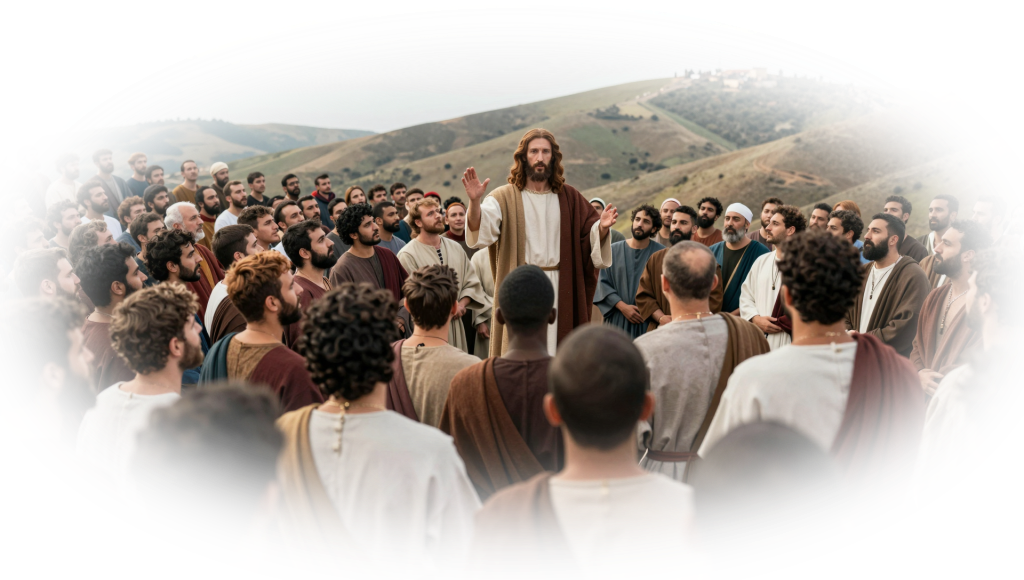
Jesus didn’t hide that cost from the crowds who followed Him. In Luke 14, He told them plainly that anyone who would become His disciple must be willing to take up his cross and follow Him. He even told them to count the cost before they began.
That’s a challenging message in a culture where Christianity can sometimes be reduced to a decision, a prayer, or an affirmation.
Jesus calls us to something much more profound.
He calls us to Himself.
And when we understand what He has done for us, the question isn’t simply, “Do I believe?”
It’s this:
“Am I willing to follow Him – whatever the cost?”
That is what this video, Counting Costs, explores.
Believing in Christ is more than simply agreeing that He is real. The Greek word πιστεύω carries the idea of trust, commitment, and placing our confidence in Him. Jesus never promised that following Him would be easy. He told us to count the cost – and then follow Him anyway.
We often think of generosity in terms of what we have left to give. Our time is limited. Our energy runs out. Our attention can only stretch so far. When we are already focused on one urgent need, it is easy to overlook another.
But Jesus is different.
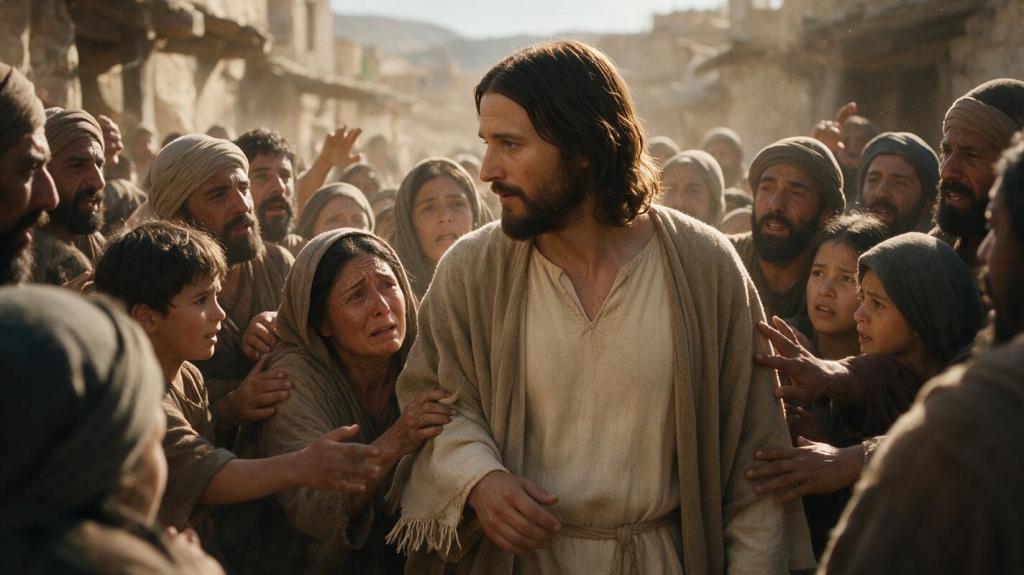
In Luke 8, Jesus is on His way to the home of Jairus, whose twelve-year-old daughter is dying. The situation is urgent. Yet along the way, a woman reaches out in faith and touches His garment – and Jesus stops for her.
He was not too busy for her.
There is another detail here that is easy to miss. This woman had suffered for twelve years – the same length of time that Jairus’s daughter had been alive. Whether Luke intends us to see significance in the parallel or simply records these remarkable circumstances, the contrast is striking: a woman who had endured twelve years of suffering and a twelve-year-old child whose life was slipping away.
Jesus met them both.
His compassion was not diminished by another person’s need. His power was not exhausted by one miracle. His grace simply flowed from Him to another who desperately needed it.
That is the extravagance of Christ.
Like the stream flowing in this video, His grace keeps moving. It does not run dry because someone else has received it.
Maybe you feel hidden in the crowd, carrying a need no one else can see. Or perhaps you are waiting for an answer while circumstances grow darker.
Take heart.
Jesus sees you. His grace is not limited, His compassion is not exhausted, and His goodness has not reached its end.
Come to Him. His fountain never runs dry.
His grace is never diminished by giving. His compassion never runs dry. Come to Christ with your need – His fountain of mercy is always flowing.
One last thing to add to this; there are millions of people around the world who believe that a grown man marrying a six-year-old (consummating that marriage only three years later when she was only nine-years-old) is acceptable. They will tell you that, at age nine, this girl had become a woman.
Now, contrast that with Jesus’ treatment of the woman who touched his garment (in the Greek the word used for woman was γυνή, pronounced goo-nay). The woman (γυνή) had been bleeding for twelve years, the Greek literally says “an issue, or flow of blood.” This wasn’t merely a physical ailment – according to Levitical law, her condition rendered her ritually unclean, making anyone she touched unclean as well. She was classified as a zabah, a woman with abnormal discharge beyond normal menstruation.
Now, the final contrast – Jesus uses the words Ἡ παῖς (pronounced ho paheece) for the girl. This is sometimes translated servant, but almost as often it is rendered as child or girl or boy. Had Jesus been referring to Jairus’ daughter as a woman, the word γυνή would have been used.
Make no mistake, Jesus considered a twelve-year-old to be a child, a girl, not a woman.
If you’ve read this far, thank you! Please consider sharing this, subscribing to my site and leaving a comment, I’d love to hear from you!
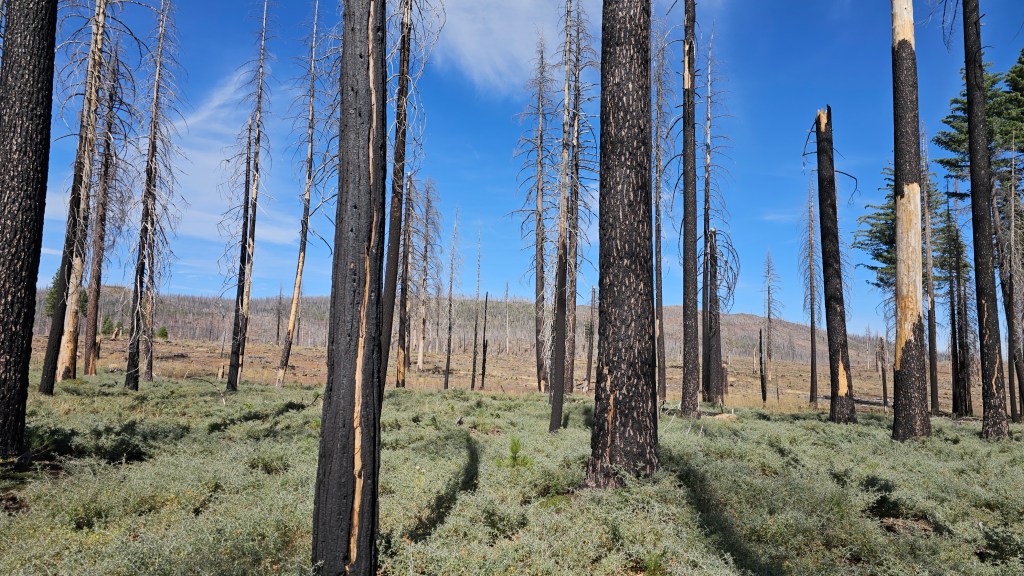
Fire leaves behind a landscape that can be difficult to look at – blackened trees, empty foundations, and the reminders of what once stood there.
But if you walk through a burned forest long enough, you begin to notice something else.
Life.
A tiny pine sapling pushing through the ash. New growth appearing along side the charred remains. Evidence that what looks dead is not necessarily the end of the story.
That is the picture behind this video, Yet, I Will Rejoice.
Living in the mountains of Northern California, wildfire is not an abstract idea for us. We have watched it destroy communities, experienced evacuation ourselves, and seen firsthand the devastation left behind. But we have also seen something else: resilience, restoration and new life.
Habakkuk understood what it meant to look at circumstances that offered no reason for worldly optimism and still choose joy.
Not because things were going well.
Not because there was plenty in the fields or livestock in the stalls.
But because God was still God.
There are seasons when the things we depend upon can disappear. Possessions can be lost. Plans can change. Circumstances can leave us standing among the ashes.
Yet God remains.
The little sapling growing among the blackened trees became a reminder to me that destruction does not have the final word.
And neither do our circumstances.
“Yet I will rejoice in the LORD; I will take joy in the God of my salvation.”
Sometimes faith simply looks like this:
Looking at the ashes – and rejoicing anyway.
When everything around us seems lost, God remains.
The burned forest, the ruins of Greenville, and the devastation left by the fires remind us that earthly things can disappear. But a small pine sapling growing among blackened trees tells another story: God can bring new life from the ashes.
“Yet I will rejoice in the LORD; I will take joy in the God of my salvation.” – Habakkuk 3:18
There are some things God says once. And there are some things He says again.
When Scripture repeats itself, we should stop and listen.
In the New Testament, Jesus often began His most important statements with the words, “Ἀμὴν ἀμὴν” – “Amen amen.” It was a divine way of saying, Pay attention. What I am about to tell you matters.
We find that same emphasis in Ezekiel. God doesn’t merely promise once to remove the stony heart of His people and give them a heart of flesh. He says it again.
Ezekiel 11:19b
“I will take the stony heart out of their flesh, and will give them a heart of flesh,”
And then:
Ezekiel 36:26b
“I will take away the stony heart out of your flesh, and I will give you a heart of flesh.”
That repetition matters.
A heart of flesh is tender toward God. It doesn’t treat sin casually. It responds when God corrects. It bends when He leads. And where once there was resistance, grace creates affection for Christ.
As you watch this video, notice the beauty of God’s creation around you. New growth, flowing water, morning light – all reminders that the God who gives life to His creation is also the God who gives new hearts to His people.
A stony heart doesn’t make itself tender.
God does.
And when God says it twice, we should listen.
When God repeats Himself, we should pay attention. “Ἀμὴν ἀμὴν” – Amen amen. God promised not once, but twice, that He would remove the stony heart and give His people a heart of flesh. A tender heart is not a perfect heart. It is a heart that grieves over sin, responds to God’s Word, bows to His will, and loves Christ. The God who gives life to His creation is still in the business of giving new hearts. Amen amen.
We see rainbows and often think of beauty, hope, or new beginnings. But the rainbow has a far greater purpose. A far greater purpose than the purpose of the “alphabet religion” which has co-opted the rainbow.
God placed it in the heavens as a reminder – not primarily for us to remember something, but for Him to remember His covenant.
Genesis 9:15 says, “I will remember my covenant.” He continues in Genesis 9:16, “The rainbow will be in the cloud. I will look at it, that I may remember the everlasting covenant between God and every living creature of all flesh that is on the earth.” (emphasis mine)
That changes the way we look at the rainbow.
It is easy for us to think that the rainbow is a reminder of our responsibility to remember God and His promises. But Scripture points us in another direction. The rainbow is God’s reminder of His covenant. It declares something about His faithfulness, not ours.
Our memories are imperfect. Our faith can waver. We can become distracted, discouraged, and uncertain. But God does not forget. His covenant does not depend upon our ability to hold on to Him. It rests upon His unchanging commitment to His people.
As you watch these moments of rainbows appearing across the landscape, consider what God intended when He placed that sign in the clouds. It is more than a beautiful display of light and color. It is a reminder that God’s promises stand because God remembers.
And that is where our security is found.
When our memories fail, He remembers.
When our faith feels weak, He remains faithful.
When we struggle to hold on to Him, He never lets go of our hand.
So the next time you see a rainbow, remember what it was placed there to proclaim:
God remembers His covenant.
A rainbow is beautiful, but its purpose is greater than beauty. God placed it in the clouds as a reminder of His covenant. He remembers—even when we forget.
There is something about standing beside the ocean that puts our lives into perspective. Wave after wave rolls toward the shore, drawn by forces we cannot see. We can watch it, hear it, and feel its power, but we cannot control it.
As I filmed these waves at Point St. George near Crescent City, California, I found myself thinking about the certainty contained in one simple phrase from the words of Jesus:
“All those whom the Father gives me will come to me. He who comes to me I will in no way throw out.” ~ John 6:37
There is both mystery and comfort in those words.
Jesus does not say that some may come if they are strong enough, good enough, or determined enough. He says they will come. The Father gives them to the Son, and Christ faithfully brings them to Himself. His grace reaches into hearts that once resisted Him and awakens a desire for the Savior they once rejected.
Yet this does not make our response unnecessary. Those whom Christ calls must still come. Faith is not something we can delegate to someone else. We come personally to Jesus, trusting Him as our only hope of salvation.
And then comes one of the most beautiful promises in Scripture: “He who comes to me I will in no way throw out.”
Think about that for a moment.
Christ does not receive us reluctantly. He does not tolerate us because He has no choice. He welcomes those who come to Him. The One who created the oceans and commands their waves opens His arms to sinners who trust Him.
We may spend much of our lives wondering where we fit, where we are wanted, or where we truly belong.
In Christ, we can stop wondering.
We belong to Him.
Sometimes we spend our lives searching for a place where we truly belong. Jesus offers something far greater: a place in Him. Those who come to Christ will never be turned away.
Our prayers can become small when our world becomes small. We pray for the people we know, the places we love, and the needs we can see. But Psalm 72:19 calls us to something much bigger: “Let the whole earth be filled with his glory!”
No exemptions. No nation beyond His reach. No people outside the invitation of His mercy.
As the earth turns, this short meditation reminds us that Christ did not save us merely to make us comfortable. His grace should move us to pray, to work, and to long for His glory to reach every corner of the world.
May the mercy that has changed us become the mercy we long to see shared with others.
Let the whole earth be filled with His glory. Amen and amen.
God’s glory knows no borders. No nation, no people, and no corner of the earth is beyond the reach of His mercy. May the grace that saved us move us to pray and work until the whole earth is filled with His glory.
Matthew 24:32 “Now from the fig tree learn this parable: When its branch has now become tender and produces its leaves, you know that the summer is near.”
Today, many Christians believe we are living in the last of the last days. Those who embrace Premillennial Dispensationalism often point to current events as evidence that Christ’s return is drawing very near. Historic Premillennialists also look for Christ’s return before His millennial reign, though many are more careful about the way they connect present-day events with specific prophecies.
Whatever one’s position, history teaches us to approach prophecy with humility.
Charles Taze Russell confidently predicted dates for Christ’s return. Every prediction failed. He was not the first to make that mistake, nor the last. Jesus Himself settled the matter when He said, “But concerning that day and hour no one knows… but the Father alone” (Matthew 24:36).
Our calling has never been to determine the day.
Our calling is to be ready.
There is a familiar saying, often attributed to Martin Luther, though historians question whether he actually spoke the words:
“Even if I knew that tomorrow the world would go to pieces, I would still plant my apple tree.”
Whether Luther said it or not, the thought captures a profoundly biblical attitude.
If Christ returns tomorrow, I will rejoice beyond anything words can express.
But if He tarries another year, another decade, or another century, I pray that He finds me faithfully doing the work He has entrusted to me. I want to continue sharing the gospel. I want to encourage fellow believers. I want to serve wherever God has placed me. In other words, I want to keep planting my apple tree.
The world around us may encourage speculation. Headlines come and go. Every generation has witnessed wars, political upheaval, natural disasters, and moral decline. Some have confidently declared that the end had arrived, only to watch history continue.
Jesus called us to something better.
He called us to faithfulness.
The fig tree reminds us that summer is near. In the same way, the signs Christ described remind us that His return is certain. Whether it is today or generations from now is not for us to know. But every sunrise gives us another opportunity to live for Him, to love others in His name, and to proclaim the good news of salvation through Jesus Christ.
So as summer moves toward those Summer Doldrums but life continues at a breakneck pace, let’s not allow it to push our thoughts of God aside. Instead, let the sight of fruit laden branches remind us that our Lord is faithful to every promise He has made.
So as summer moves toward those inevitable summer doldrums, even while life continues at a breakneck pace, let’s not allow the busyness of the season to push our thoughts of God aside. Instead, whenever we see the fig tree clothed in leaves or the orchards heavy with fruit, may we remember that our Lord is faithful to every promise He has made. One day, just as surely as summer follows the budding branch, our King will return. Until then, may He find us faithfully planting our apple trees.
Some seasons leave us feeling strong. Others leave us bruised.
Jesus knows the difference.
In Matthew 12:20, we are given one of the most comforting pictures of our Savior: “He won’t break a bruised reed. He won’t quench a smoking flax, until he leads justice to victory.” Rather than casting aside those who are weary, discouraged, or struggling, Christ gently restores them with compassion and unfailing grace.
Set against the quiet beauty of a sunset over the wetlands, this short devotional reflects on the tenderness of our Savior toward those whose faith feels fragile. If you have ever wondered whether God still cares for you in your weakness, this reminder is for you.
Watch the video below, and be encouraged by the gentle hands of Christ.
A Bruised Reed
When your faith feels fragile, Christ’s compassion remains strong. A quiet reminder that He never casts aside those who trust in Him.
There are moments in Scripture that seem almost too simple to notice, yet they contain some of the deepest truths of the Christian faith. One of those moments is found after the resurrection when we read that Jesus appeared first to Mary Magdalene. It is a quiet detail, but one filled with hope.
Mary’s past was marked by brokenness, yet she became a beautiful testimony of Christ’s delivering power. Her story reminds us that our past does not define our future. The Savior who freed her from bondage welcomed her into close fellowship and entrusted her with the joyful news that He had risen.
This short video, Delivered by Christ, reflects on that remarkable encounter. Set against a peaceful sunset over Lake Almanor, it is an invitation to pause for a few moments and remember that Christ still calls His people by name. His grace still breaks chains. His presence still turns sorrow into joy. And His delivering power is just as real today as it was on that resurrection morning. I pray this video encourages you to rest in the freedom that is found only in Jesus Christ.
Delivered By Christ
No chain is stronger than the delivering power of Christ. Delivered by Christ reflects on Mary Magdalene’s encounter with the risen Savior and reminds us that the One who called her by name still delivers, restores, and draws His people into the joy of His presence.
The Christian life is more than knowing what Christ has done for us—it is learning to walk with Him every day. Following Delivered by Christ, this devotional reflects on the example of Mary Magdalene, whose love for Jesus led her to seek Him before the sun had fully risen.
Filmed against the peaceful waters of Northern California’s Feather River, this video reminds us that fellowship with Christ begins with a heart that longs for His presence. Like the steady flow of the river, His grace is constant, inviting us to seek Him each new morning with faith, courage, and love.
Early Shall I Seek
Because Christ has delivered us, we now seek Him. Learn from Mary Magdalene’s example of wholehearted devotion and the joy of daily fellowship with the risen Savior.
As often happens in the Spring, life shifts into overdrive as the weather begins to turn nicer. Weekends filled up quickly. We would be out of town, then come home to several days of rain. Just when the ground dried out enough to think about mowing the lawn, we’d be gone again. Then more rain would arrive.
Before I knew it, the lawn had become embarrassingly tall.
As I stood there looking at it, I realized something. The grass hadn’t gotten that high because I neglected it. It had gotten that high because a lot of little delays had piled up over time. Each delay seemed reasonable. Each one had an explanation.
Yet the grass kept growing.
That got me thinking about Biblical interpretation.
Most people don’t wake up one morning believing something completely contrary to Scripture. Usually, it happens gradually. A verse is taken out of context. A difficult passage is overlooked. A cultural assumption slips in unnoticed. Then another. And another.
Like grass after a spring rain, error has a way of growing when left unattended.
The encouraging part is that God has given us the perfect tool for tending our spiritual understanding: His Word.
When I finally started the mower, I didn’t waste time complaining about the rain or regretting my busy schedule. I simply began mowing.
Maybe that’s a lesson for all of us.
When we discover that our thinking has become tangled with assumptions, traditions, or distractions, we don’t need to despair. We simply return to Scripture and allow God to do His work.
The lawn may have been overgrown.
But it wasn’t lost.
And neither are we.
With all that rain, at least I was able to make a few videos. I uploaded several shorts to YouTube. The full width videos below are just three of those. Check out my YouTube channel. https://www.youtube.com/@stevenstoops3121/shorts
Many believers carry burdens Christ never intended them to bear. Old failures, lingering guilt, and the memory of past sins can sometimes feel louder than the promises of God. Yet the message of the cross declares a different reality.
In this short devotional video, Condemned No Longer, we reflect on the victory Christ secured through His death and resurrection. When Jesus cried, “It is finished,” He broke every weapon of condemnation that stood against His people. The accusations of the enemy were silenced, the debt of sin was paid in full, and the power of guilt was forever defeated.
Drawing inspiration from Psalm 76:3, this meditation reminds us that the arrows of accusation and the sword of judgment have been shattered by our Redeemer. What once threatened our souls now serves only as a testimony to God’s saving grace.
If you have ever struggled with shame, regret, or the feeling that your past still defines you, this message offers a powerful reminder of the freedom found in Christ. Because of His finished work on the cross, believers can rest in the assurance that they are forgiven, redeemed, and condemned no longer.
Condemned No Longer
The cross changed everything. Through His finished work, Jesus broke every weapon of condemnation, silenced every accusation, and secured our redemption forever. A brief devotional reflection on the freedom, forgiveness, and victory found in Christ.
The Christian life is not defined by a strong start, but by faithful endurance. Persevere is a narrated worship video that encourages believers to keep pressing forward through every challenge, temptation, and season of weariness. Accompanied by evocative watercolor imagery of exhausted marathon runners crossing the finish line, this video illustrates the spiritual race every follower of Christ is called to run.
As the world distracts, the flesh seeks comfort, and the enemy attacks steadfast faith, God’s Spirit empowers His people to endure. This inspiring reflection reminds viewers that perseverance is the mark of genuine faith and that the Lord remains faithful to sustain His children until the race is complete.
Ideal for worship services, sermon introductions, small groups, and personal devotion.
Persevere (Narrated Version)
A narrated worship video about enduring faith and finishing the race Christ has set before us. Featuring watercolor imagery of marathon runners and a powerful message of perseverance in the Christian life.
Persevere (Text Version)
The Christian journey is a race of endurance. Perseverance is a text-driven worship video that encourages believers to remain faithful through trials, temptations, and spiritual opposition. Set against artistic watercolor imagery of weary marathon runners approaching the finish line, each carefully timed phrase invites viewers to reflect on God’s sustaining grace and the call to press on in faith.
I have always thought that John 15 was a foundational chapter of the Bible. Whenever I felt that temptation was going to sweep me away, it was always due to me not remaining near to Jesus. Once I began to read the Word and pray, I found that the temptation faded.
When I was a Youth Worker, I taught John 15, Isaiah 55 and the book of Romans on repeat. Not so much that the kids needed to hear it, but because I needed to hear it.
There is something steadying about the words of Jesus in that chapter. He does not begin with a list of things we must accomplish. He begins with a relationship. A branch does not strain to produce fruit. It simply stays connected to the vine. Life flows from the vine into the branch, and fruit follows naturally.
For many of us, the Christian life becomes exhausting because we try to reverse that order. We attempt to produce the fruit first – patience, strength, holiness, endurance – while forgetting the quiet source from which those things grow. We work, we strive, and we worry that we are not doing enough. Yet Jesus keeps bringing us back to the same simple invitation: remain in Me.
Remaining is not dramatic. It is often very ordinary. It is opening the Scriptures when the day begins. It is speaking honestly to the Lord in prayer. It is turning our thoughts back to Him when the mind begins to wander. It is remembering, again and again, that we were never meant to live this life apart from Him.
And something beautiful happens when we do. Temptation begins to lose its grip. Fear loosens its hold. Even the restless noise of the world grows quieter. Not because our circumstances suddenly change, but because we are drawing life from the One who never changes.
The branch does not survive by visiting the vine occasionally. It lives because it remains.
I hope that anyone who reads this will be encouraged – that they will desire to “Remain!”
Because that chapter has always meant so much to me, I created two videos, a text version and a narrated version. Both based on John 15:4.
Remain (Narrated Version)
Remain (Narrated Version) “Remain in me, and I in you.” — John 15:4 A branch only bears fruit when it stays connected to the vine. The same is true for us. This short visual reflection explores the quiet power of remaining in Christ—where strength, peace, and lasting fruit are found.
Remain (Text Version) “Remain in me, and I in you.” — John 15:4 A branch only bears fruit when it stays connected to the vine. The same is true for us. This short visual reflection explores the quiet power of remaining in Christ—where strength, peace, and lasting fruit are found.


Leave a Reply